
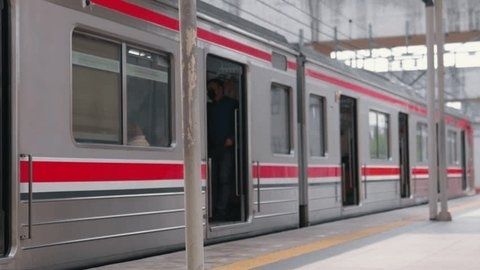
Navigating the Structural Gridlock Along Central Florida”s Spine
Central Florida”s rail debate is not simply a question of whether the region can attract more riders. It is a question of whether a transportation system shaped by low-density development, highway expansion, and multiple decision-making bodies can support reliable fixed-guideway service. Along the Interstate 4 corridor, new housing, tourism, employment, and logistics activity continue to spread across a broad geography. That pattern creates demand for mobility, but it also disperses the trips that passenger rail needs to serve efficiently.
The operational problem becomes sharper at municipal and county boundaries. A train may cross several jurisdictions during one trip, yet zoning, road access, station design, funding priorities, and service expectations can change repeatedly along the route. SunRail, Brightline, the Florida Department of Transportation, local governments, and private rail interests do not operate under one unified institutional framework. The central challenge is therefore structural: passenger expansion must share or interface with freight infrastructure while agencies coordinate schedules, capital programs, safety rules, and land-use decisions that were not originally designed as one system.
Suburban Sprawl and the Geography of Decentralized Transit
Central Florida”s suburban growth model is well suited to private vehicles. Large residential subdivisions can be built on comparatively inexpensive land, connected to arterial roads, and supplied with parking at a scale that makes driving convenient. The same pattern is difficult for rail. Fixed-guideway service performs best when many potential riders live, work, study, shop, or transfer within a short and safe access distance of stations. When destinations are separated by wetlands, multilane roads, gated communities, surface parking, and disconnected sidewalks, the train may be physically present but functionally remote.
This is the central mismatch between economic growth and transit productivity. Major employment centers around tourism, convention activity, airports, health care, education, and distribution may generate substantial trip volumes, but they are often arranged as specialized districts rather than compact, mixed-use neighborhoods. Traditional commuter rail station footprints can then become islands surrounded by parking or roadway infrastructure. A station can have a large catchment area on a map while producing weak walk-up access and limited all-day demand.
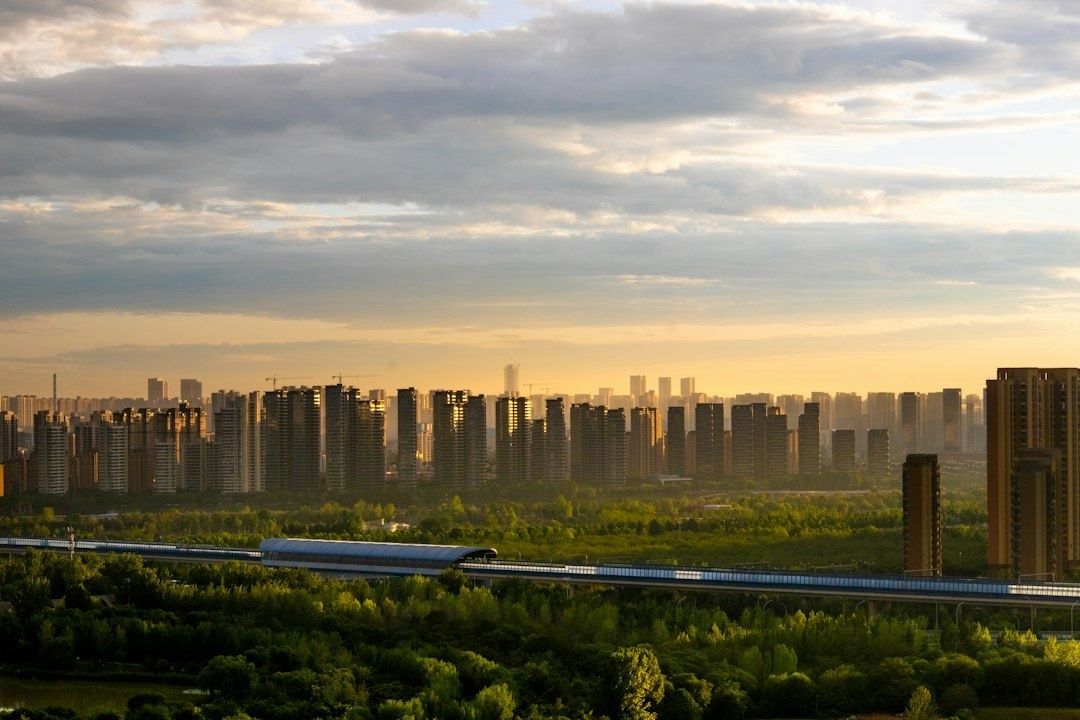
Regional analysis of SunRail operations and station access patterns, including the historical record of SunRail, reinforces a practical lesson: station placement alone does not create transit-oriented development. Three land-use criteria are non-negotiable for viable station areas:
- Concentrated activity: housing, jobs, services, and civic uses must be clustered closely enough to generate demand throughout the day, not only during a narrow peak commute.
- Safe multimodal access: sidewalks, crossings, bicycle connections, bus transfers, and direct street links must connect the station to surrounding parcels without forcing users through hostile roadway environments.
- Regulatory capacity: zoning must permit sufficient residential and employment intensity, mixed uses, smaller blocks, and redevelopment over time, with parking rules that do not consume the land needed for productive urban form.
These requirements also expose the weakness of nominal walkability. A subdivision may include sidewalks internally while remaining separated from a station by a high-speed arterial or a drainage corridor. Likewise, a master-planned district may contain apartments and retail but still depend on private vehicles because the regional street network offers no direct transfer path. The remedy is not to promise rail access and wait for density to appear. Local governments and developers must sequence rezoning, street investment, affordable housing, and station-area redevelopment so that ridership and land value reinforce one another.
Shared Trackage and Freight Conflicts on Regional Arterials
Passenger rail and freight rail can share a corridor, but the arrangement is governed by capacity, dispatching, safety, and maintenance constraints. Freight trains are longer, heavier, and less flexible than passenger trains. Passenger services, by contrast, depend on predictable departures, consistent station dwell times, and recovery margins that protect the timetable from small disruptions. When both uses compete for the same track or junction, a delay can propagate quickly through the entire operating plan.
Dispatch prioritization is therefore a policy decision with direct service consequences. If freight movements receive priority at a junction, passenger trains may be held outside stations or lose their scheduled crossing windows. If passenger trains receive priority during peak periods, freight operators may face constrained delivery windows and reduced network flexibility. Speed restrictions add another layer of complexity, particularly where track geometry, grade crossings, bridges, signaling, or maintenance conditions prevent passenger trains from operating at their desired speeds. Positive train control can improve collision prevention and movement authority, but it does not create additional track capacity or eliminate the need to coordinate operating rules, dispatch systems, and maintenance possessions.
Florida”s experience with complex passenger expansion elsewhere in the state illustrates the scale of the coordination task. Tri-Rail”s eventual connection to downtown Miami required years of planning, construction, and logistical work before direct service to MiamiCentral could begin. The project involved multiple jurisdictions and a local investment to accommodate trains at the terminal. Central Florida”s planners should treat that example as an operational warning rather than a simple success story. A direct connection can improve regional access, but only when infrastructure, rolling stock, dispatching, station interfaces, customer information, and institutional responsibilities are aligned.
| Operating model | Primary benefit | Primary constraint |
|---|---|---|
| Shared freight and passenger right-of-way | Uses existing corridors and can reduce initial acquisition costs | Schedules, speeds, maintenance, and dispatching remain interdependent |
| Expanded shared corridor with additional passing or dedicated tracks | Improves flexibility while retaining some existing infrastructure | Requires complex construction staging, signaling, and property coordination |
| Fully segregated passenger corridor | Offers the greatest timetable control and expansion potential | Requires substantially higher capital investment and dedicated right-of-way |
Any Central Florida track-sharing protocol should be tested against the state rail system plan and translated into enforceable operating agreements. The critical questions are practical: who controls dispatching, which trains receive priority, how maintenance windows are protected, what happens during an incident, and how capacity is reserved for future service. Without written answers, optimistic ridership projections can conceal an unreliable operating model.
The Sunshine Corridor and the Mechanics of Multi-Agency Coordination
The Sunshine Corridor Program offers a useful integration model because it is conceived as a multimodal passenger rail initiative rather than an isolated station project. The Transit Corridor and Alternatives Review Study is evaluating an extension of SunRail toward Orlando International Airport, with concepts continuing west toward the Orange County Convention Center and southwest toward the South International Drive and Disney Springs areas. The broader objective is to connect major employment and visitor destinations while enabling transfers to Brightline”s privately operated intercity service between Miami and Orlando, with a possible future connection toward Tampa.
The case for integration is strengthened by demonstrated intercity demand. Brightline reported that its Florida system carried 292,339 riders in June 2026, with 92 percent on-time performance and service linking Miami and Orlando through six stations, including Orlando International Airport. Those figures do not automatically prove that a new commuter corridor will succeed, because intercity and commuter markets have different trip purposes, fares, schedules, and service standards. They do show, however, that Central Florida”s airport and tourism economy can support substantial passenger movement when the service is direct, visible, and operationally dependable.
Governance friction remains the main implementation risk. Local transit authorities control or influence service planning and station access. FDOT controls major highway and state transportation funding decisions. Private rail operators bring their own capital structures, commercial priorities, safety procedures, and performance requirements. Counties and municipalities control zoning, development approvals, local streets, and portions of the pedestrian environment. A corridor can therefore be technically feasible but institutionally stalled if each participant advances a different definition of success.
Four coordination stages can reduce that risk:
- Define the operating concept: establish the intended markets, service frequency ranges, transfer assumptions, rolling-stock requirements, peak and off-peak patterns, and acceptable reliability standards before finalizing physical alternatives.
- Lock the corridor and interfaces: identify right-of-way ownership, freight conflicts, grade crossings, station access, utility impacts, maintenance facilities, and connections to airport, convention, tourism, and intercity infrastructure.
- Match authority to funding: assign each capital and operating responsibility to a legally capable sponsor, then align state, federal, local, private, and value-capture resources with the project schedule.
- Test the integrated timetable: model dispatching, transfers, recovery time, incident response, special-event surges, and future service growth before committing to a public opening date.
This sequence prevents a common failure mode in regional infrastructure: celebrating a concept map before proving that the institutions can operate it. Transfers should be designed as timed, legible passenger experiences, not merely as lines that happen to meet. The same principle applies to development. Private projects near proposed stations should be evaluated against confirmed access, service, and zoning commitments rather than speculative proximity.
Engineering Resilience and Financial Viability Beyond Federal Grants
Farebox recovery is vulnerable in a region where highway widening receives sustained public investment and driving remains the default choice for many households. The Moving I-4 Forward program is accelerating the addition of two express lanes in each direction across a major Central Florida segment, with the stated aim of delivering congestion relief earlier than previously scheduled. Such investment may improve mobility and safety, but it can also reduce the immediate pressure to switch modes, especially when parking remains abundant and development continues at the suburban edge.
That does not make passenger rail financially unsound, but it does require a more realistic revenue model. Fare revenue should be tested against conservative assumptions for ridership, service frequency, fare policy, labor costs, energy, insurance, maintenance, and competing roadway conditions. Event-driven demand can be valuable around airports, conventions, and tourism districts, yet it should not be treated as a substitute for stable weekday trips. The Brightline figures show the potential of strong demand, but they also underscore the importance of distinguishing long-distance, short-distance, premium, commuter-pass, and special-event markets.
Public-private structures can contribute capital and development expertise, particularly around terminal hubs and major interchange locations. Value capture may include tax-increment mechanisms, development agreements, air-rights strategies, station-area land assembly, or contributions tied to increased development capacity. These tools work only when the public sector establishes a credible station investment and the private sector accepts delivery, market, and operating risks. Real estate forecasts should rely on net operating income, absorption, insurance, maintenance, interest rates, and downside scenarios rather than assuming that a rail announcement will automatically generate appreciation.
Long-term resilience requires an asset-renewal program established before the system reaches crisis condition. The reconstruction of Denver”s oldest light rail infrastructure is a useful reminder that heavily used rail assets eventually require full-depth track work, electrical upgrades, station improvements, utility coordination, and bridge rehabilitation. For Central Florida, ongoing programs should include:
- Condition-based inspection: use track, signal, power, bridge, station, and rolling-stock data to identify deterioration before failures disrupt service.
- Renewal reserves: dedicate predictable annual funding for replacement cycles instead of relying on emergency appropriations or one-time grants.
- Operational redundancy: maintain bus bridges, spare equipment, alternate turnback options, and incident procedures that protect passengers during construction or outages.
- Lifecycle procurement: evaluate initial price alongside energy use, parts availability, maintainability, staff training, and expected service life.
The financial test is therefore broader than construction cost. A corridor is viable when its sponsors can fund operations, renew critical assets, absorb disruptions, and preserve safety performance over decades. Federal grants can help build the system, but they cannot replace disciplined local governance and recurring maintenance revenue.
Building Resilient Regional Transit Through Disciplined Execution
Central Florida”s next rail phase should move beyond speculative enthusiasm and toward operations-focused corridor engineering. The region has genuine demand drivers, including population growth, tourism, airport activity, employment concentration, and the expanding role of intercity passenger service. Yet those drivers will not overcome unreliable dispatching, weak station access, fragmented governance, or zoning that continues to place new households beyond practical reach of rail.
The decisive policy shift is to treat land use, rail infrastructure, and operations as one investment system. A station should not be approved as a stand-alone platform while surrounding codes preserve low intensity, excessive parking, disconnected streets, and barriers to mixed-use redevelopment. Local governments need zoning and access commitments that make capital investment productive, while rail sponsors need service plans clear enough for developers to make informed decisions.
- Map freight conflicts, junction constraints, maintenance windows, and future passenger capacity before selecting a preferred corridor.
- Assign one accountable lead for cross-agency decisions, with written agreements covering dispatch, funding, safety, data, and incident response.
- Adopt station-area zoning that supports compact mixed use, diverse housing, smaller blocks, and direct walking and cycling connections.
- Model conservative farebox, ridership, insurance, labor, energy, and maintenance assumptions under both highway-expansion and economic-downturn scenarios.
- Secure lifecycle renewal funding at the same time as construction funding, including track, power, signals, stations, bridges, vehicles, and accessibility features.
- Measure success through reliability, access, transfer quality, cost per passenger, development delivery, and equity outcomes rather than ribbon-cutting milestones alone.
Over the coming decade, disciplined execution will matter more than the number of lines shown on a regional map. Central Florida can build a more resilient passenger rail network, but only by resolving freight interfaces, synchronizing agencies, and reshaping suburban growth around dependable stations. The durable advantage will belong to corridors that are engineered for daily operations and supported by land-use rules capable of sustaining them.