
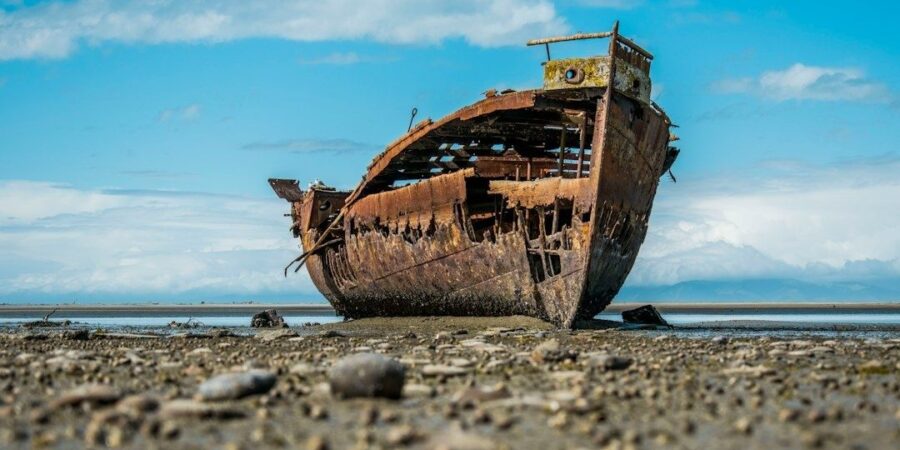
Navigating the Treacherous Corridors of the Florida Straits
In the nineteenth century, the Florida Straits functioned as both a commercial highway and a high-consequence maritime trap. Strong Gulf Stream currents, sudden tropical weather, limited visibility, and submerged coral reefs created a difficult operating environment for vessels moving between Atlantic shipping hubs and the Gulf of Mexico. The danger was not confined to exceptionally poor seamanship. Even experienced crews working from contemporary charts could encounter reefs that were shallow, sharp, difficult to see, and imperfectly surveyed.
That persistent exposure created structural friction across the maritime economy. Cargo could be delayed, damaged, or scattered; crews required immediate rescue; and shipowners faced uncertain financial losses. The risks also produced an organized response. Key West developed from an isolated outpost into a center for wrecking, cargo recovery, court-supervised salvage, and maritime risk management. To understand the wider setting, readers can consult the National Park Service account of Florida”s maritime history, which places reefs, currents, ports, weather, and expanding trade within the peninsula”s long development.
The Anatomy of Coral Reef Hazard Architecture
The hazards of the Florida Keys were a system rather than a single obstruction. The Gulf Stream could push a deep-draft vessel laterally while the crew relied on dead reckoning, compass readings, soundings, and visual landmarks. A navigational error that might have been recoverable in open water could become catastrophic when a vessel entered a reef corridor. Once the keel contacted coral, waves and current could turn a manageable grounding into hull breach, cargo shift, structural fracture, or complete breakup.
Nineteenth-century sailing vessels were especially vulnerable at night and during tropical weather. Navigation depended heavily on celestial observations, estimated speed, remembered bearings, and charts that could not identify every coral head. Storm clouds obscured stars, rain reduced visibility, and wind or current altered the vessel”s actual track. The expanding volume of Atlantic and Gulf commerce meant that the same environmental weaknesses were repeatedly exposed by more ships, more cargo, and more complex traffic patterns.
| Reef area | Primary threat vector | Operational consequence |
|---|---|---|
| Carysfort Reef | Major route exposure, submerged coral, strong current, and poor visibility | High risk of grounding for vessels carried toward shallow reef formations |
| Garden Key | Sand banks, coral reefs, and the convergence of Atlantic, Gulf, and Caribbean waters | Demand for a visible navigation aid near an important maritime approach |
| Sand Key | Extended reef line and insufficient coverage from existing markers | Need for additional lighthouse infrastructure and improved coastal surveying |
Historical navigation records show why the problem was persistent. British warships gave several reefs their names after grounding there, despite trained crews and the best available charts of their era. The broader record of navigation aids, coastal mapping, and reef hazards is documented in NOAA”s Historic Navigation overview. Its central lesson is operationally important: when hazard information is incomplete, even competent operators can experience repeated failures at the same chokepoints.
Legal Governance and the Key West Admiralty Court Protocol
Wrecking could easily have become a system of opportunistic seizure. Cargo scattered across a reef was valuable, ownership was often difficult to establish immediately, and distressed masters had limited bargaining power. The legal response was therefore not an administrative detail. It was a control mechanism designed to distinguish emergency assistance from plunder and to make recovery economically attractive without granting salvors unlimited authority over property.
Key West became particularly important after its designation as a port of entry in 1822. Territorial and federal measures adopted in the 1820s required recovered property to be reported and brought into the proper legal channel. The Superior Court of the Southern Judicial District in Key West, established in 1828, provided a formal setting for maritime disputes and salvage claims. Licensing requirements, partnerships, court rules, and port procedures helped convert a dangerous local practice into a recognizable profession.
- Establish the peril. The court first needed to determine whether the vessel, crew, or cargo faced genuine maritime danger and whether the assistance provided was necessary.
- Assess the service. The record considered the salvors” labor, skill, equipment, time, and exposure to hazards such as surf, current, fire, structural collapse, and storms.
- Preserve and identify value. Cargo had to be secured, inventoried, and connected to its owners where possible. Bringing goods into Key West supported accountability and reduced private disputes.
- Determine the award. Compensation was based on the value preserved and the difficulty of the operation, rather than allowing arbitrary possession to become the reward.
This framework also created incentives for competence. A licensed wrecking operator needed a seaworthy craft, an appropriately qualified master, and the ability to respond quickly. The system did not eliminate conflicts of interest or accusations of abuse, but it established an auditable path for resolving them. In risk-management terms, the court transformed uncertain emergency labor into a governed service with defined evidence, decision points, and compensation logic.
Operational Logistics and Incident Response on the Reef
Effective wrecking depended on speed, hierarchy, and practical judgment. The wrecking master coordinated the response, assessed whether the stranded vessel could be refloated, and assigned crews to protect life before cargo. A grounded ship might need immediate removal of ballast, anchors, provisions, or heavy equipment. Cargo was then transferred into lighter vessels, often under unstable conditions, while the wrecking crew monitored tides, hull movement, and weather.
The physical environment made every recovery a high-risk operation. A breached hull could shift without warning. Cargo could move inside the vessel and alter its stability. Surf could throw men against coral, while a rising tide or hurricane surge could erase the margin between a successful recovery and a second casualty. Skilled wreckers therefore combined local knowledge with disciplined improvisation. They understood reef contours, tidal windows, channels, wind changes, and the limits of their equipment.
- Shallow-draft wrecking sloops could approach reef edges and stranded vessels more closely than deep-draft commercial ships.
- Lighters and cargo boats provided the carrying capacity needed to remove goods before a wreck deteriorated.
- Block-and-tackle systems multiplied pulling force for shifting cargo, tightening lines, and assisting attempts to refloat hulls.
- Derrick rigs helped lift machinery, ballast, and other heavy objects from damaged vessels.
- Diving apparatus and skilled divers supported work below the waterline, although conditions remained constrained by visibility, current, depth, and available technology.
The recovery of the Isaac Allerton in 1856 illustrates the economic scale of this work. The vessel broke apart during a violent storm, scattering textiles, cigars, tobacco, tools, machinery parts, and manufactured goods. Organized recovery required more than individual courage. It depended on crews, boats, storage, sorting, ownership records, and legal adjudication. Salvage awards circulated money through Key West, supporting families, shipyards, warehouses, merchants, and construction. The same industry that responded to disaster became a foundation for urban development.
Deploying Structural Defenses with Offshore Screw-Pile Lighthouses
Wrecking addressed failure after a vessel entered distress. Federal navigation policy increasingly sought to reduce the frequency of that failure in the first place. The Lighthouse Act of 1789 established a national basis for navigation aids, and Congress authorized lighthouse construction in the Florida Straits during the 1820s. Lightships, shore towers, beacons, charts, soundings, and coastal surveys formed layers of protection, although the lengthy reef line could not be made safe by a single structure.
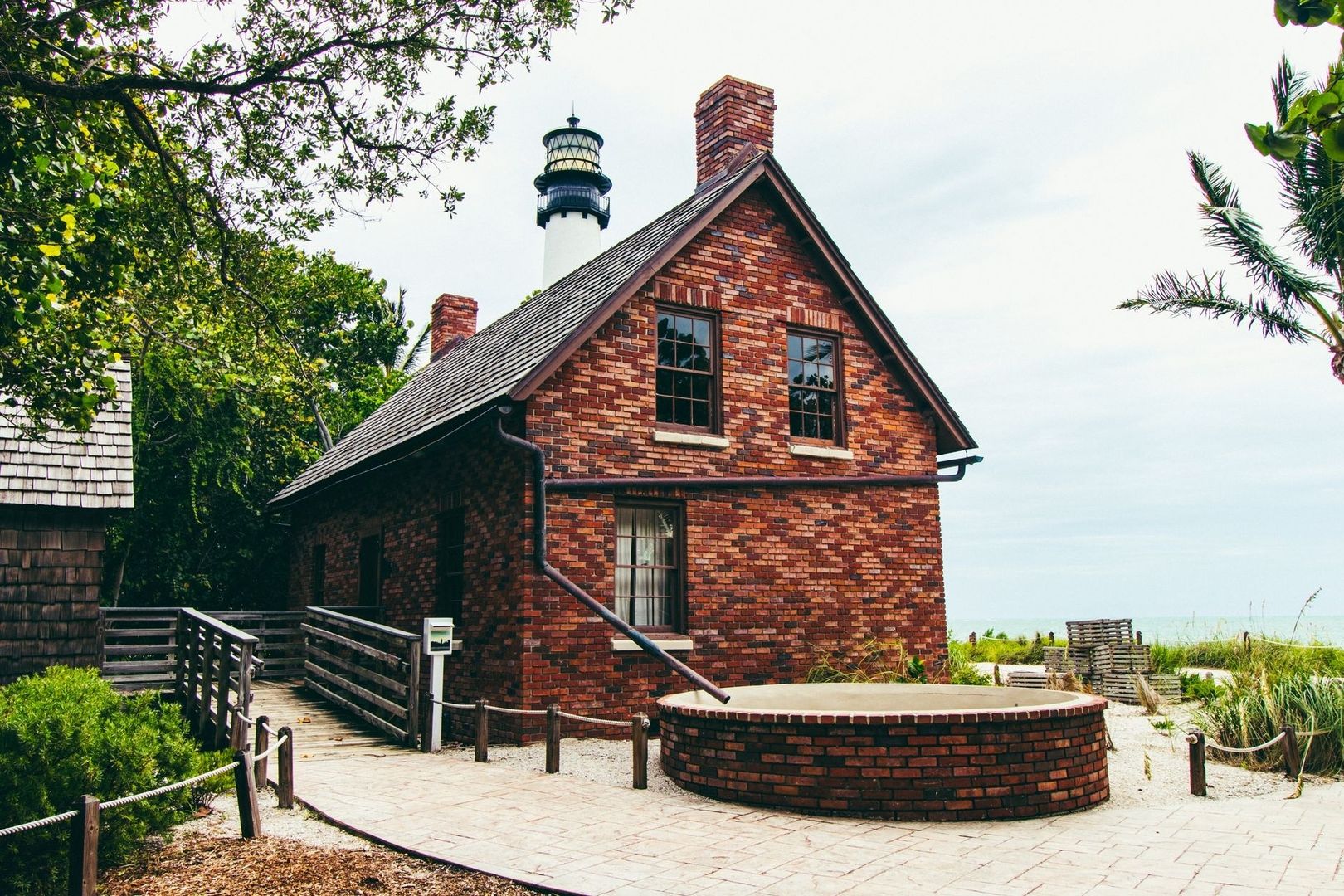
Engineering limitations were significant. A conventional masonry tower was difficult to establish on a submerged reef and vulnerable to waves, salt, and foundation instability. The screw-pile lighthouse offered a different solution. Iron legs could be driven into the reef, supporting an elevated structure while allowing storm surge to pass beneath it. At Carysfort Reef, Lieutenant George Meade adapted the design for the local coral foundation. The 112-foot lighthouse was first lit on March 10, 1852, creating a prominent warning point for commercial, military, fishing, and pleasure vessels.
- Early warning: A visible light gave navigators a reference point before a reef became an immediate threat.
- Infrastructure redundancy: Lighthouses supplemented charts, soundings, local knowledge, and later systematic Coast Survey work.
- Reduced response demand: Fewer groundings meant less exposure for wreckers and lower pressure on courts, warehouses, and insurers.
- Regional confidence: More predictable navigation supported investment in ports, trade, military facilities, and communications.
Garden Key demonstrates the earlier stage of this protective architecture. The lighthouse completed there in 1826 stood on the island”s eastern shore and served a location surrounded by sand banks and reefs at the meeting point of major bodies of water. Sand Key also received a permanent lighthouse as authorities expanded coverage. These measures did not eliminate maritime danger, and the Coast Survey continued mapping and marking the Keys for more than three decades beginning in 1849. Their importance lies in the shift from recovery alone toward layered prevention.
The economic result should be understood carefully. Available records support a reduction in navigational exposure and a stronger basis for commercial confidence, but they do not establish a single uniform premium figure or a simple one-step collapse in insurance costs. The durable effect was more practical: better information and visible aids improved the predictability of maritime risk. That predictability allowed owners, insurers, courts, salvors, and port authorities to plan around hazards rather than treating every passage as an entirely unknown event.
Extracting Modern Resilience from Maritime Risk Governance
The Florida Straits salvage economy shows how a dangerous environment can generate durable institutional capacity. Coral reefs and currents created the threat, but law, equipment, local expertise, courts, ports, warehouses, and navigation infrastructure determined whether the threat became permanent disorder or manageable risk. Key West”s prosperity was therefore not simply the product of valuable cargoes. It depended on the ability to respond rapidly, preserve property, document outcomes, and distribute compensation through recognized rules.
The historical model remains relevant to modern infrastructure and emergency planning. Critical chokepoints require both aggressive incident recovery and layered protective architecture. A resilient system should combine clear authority, qualified responders, reliable reporting, evidence-based compensation, accurate hazard mapping, and physical safeguards that reduce the number of incidents requiring emergency intervention.
- Define authority before failure occurs. Emergency powers, reporting channels, and ownership rules should be clear under pressure.
- Invest in prevention as well as response. Navigation aids, surveys, monitoring, and resilient structures reduce the burden placed on first responders.
- Reward competence transparently. Compensation should reflect risk, skill, resources, and value preserved without encouraging opportunistic seizure.
- Design for changing conditions. Weather, traffic, technology, and environmental exposure can alter the risk profile of a familiar route.
The wreckers of the Florida Keys were neither merely pirates nor romantic adventurers. Within an increasingly formal system, they were emergency operators working at the boundary between commerce and catastrophe. Their history demonstrates a practical principle that remains valid: resilience is built when law, logistics, expertise, and protective infrastructure are designed to reinforce one another.