
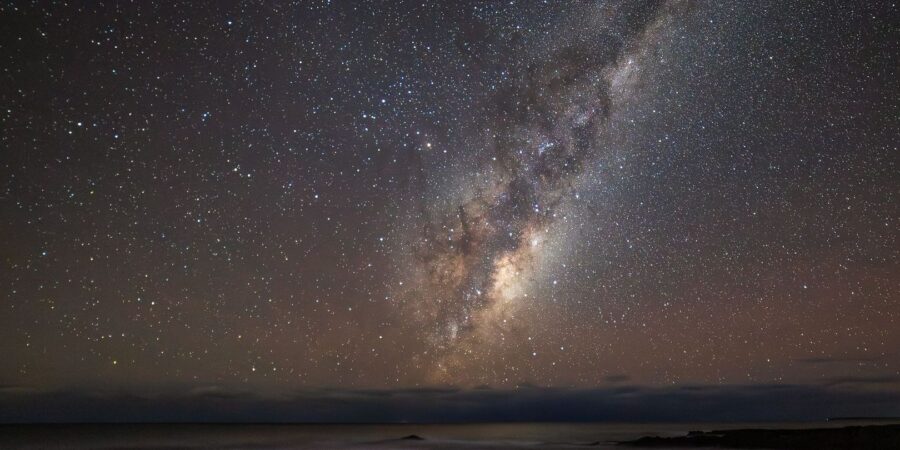
The Strategic Defense of Florida After-Dark Sanctuary
Florida”s remaining dark skies are no longer an incidental benefit of distance. They are ecological infrastructure under pressure from coastal development, expanding transport corridors, commercial lighting, and residential growth. Across the peninsula, urban glow can spread far beyond municipal boundaries, turning formerly useful observing sites into compromised transition zones. For field observers and conservation planners, the central question is not simply where stars remain visible. It is whether darkness can be measured, defended, and maintained as a protected environmental condition.
The Bortle Dark-Sky Scale provides a practical field language for that assessment. At the urban end, artificial sky brightness erases many stars and weakens the contrast needed for serious observation. At the rural end, Class 1 and Class 2 conditions preserve the Milky Way”s structure, strong zodiacal light, and faint astronomical objects that disappear near metropolitan centers. In central and southern Florida, places such as Kissimmee Prairie Preserve can function as interior buffers, but only when surrounding agencies treat lighting as a perimeter-security problem. The first line of defense is controlling the direction, spectrum, intensity, and operating time of every avoidable light source near the protected zone.
Threat Assessment and the Mechanics of Coastal Photopollution
Coastal photopollution behaves less like a local nuisance and more like a regional signal leak. Light emitted by cities, ports, highways, resorts, and industrial sites is scattered by atmospheric molecules, aerosols, humidity, and cloud cover. Under favorable conditions, a bright coastal light dome can remain visible many tens of kilometers inland, with practical assessments often using a reach of up to approximately 70 kilometers as a warning envelope rather than a fixed boundary. Moist Florida air can intensify the effect, especially when haze or low cloud reflects light back toward the ground.
A threat model should therefore track both the source and the receiving environment. A shielded amber fixture directed downward presents a very different risk from an unshielded high-output LED aimed horizontally. Blue-rich light is particularly effective at scattering through the atmosphere, while excessive lumen output creates a larger and more persistent dome even when individual fixtures appear distant. The operational concern is cumulative exposure. A rural preserve may have no major light source within its boundary yet still experience degraded zenith brightness because multiple coastal and inland sources combine across the horizon.
| Florida observing condition | Typical Bortle interpretation | Operational visibility | Primary risk signal |
|---|---|---|---|
| Major metropolitan core | Class 8 to Class 9 | Only the brightest stars and planets remain prominent | Direct glare, sky wash, and severe adaptation loss |
| Urban fringe and developed coast | Class 6 to Class 7 | Milky Way structure is largely absent or extremely weak | Multiple light domes and unshielded roadway lighting |
| Rural transition zone | Class 4 to Class 5 | Milky Way may be visible, but faint objects remain difficult | New subdivisions, towers, farms, and transport corridors |
| Protected interior prairie | Class 2 to Class 3 | Strong Milky Way detail and improved deep-sky contrast | Horizon glow, facility lighting, and boundary creep |
| Exceptional remote darkness | Class 1 | Very faint astronomical structure and natural sky brightness are apparent | Small changes become detectable and ecologically meaningful |
Kissimmee Prairie Preserve is strategically valuable because it occupies an inland landscape where extensive open terrain can interrupt the continuity of coastal development. Its value is not limited to the quality of a single observing pad. The preserve can serve as a darkness buffer, reducing the number of nearby sources and providing a monitoring baseline against which regional change can be detected. That function is fragile. A new road, facility, communications installation, or residential cluster can create a persistent horizon signal even if the preserve interior remains nominally undeveloped.
Artificial light also creates a biological exposure pathway. The National Park Service explains in Animals Need the Dark that natural darkness supports navigation, hunting, mating, predator avoidance, and physiological regulation across many species. Human health is part of the same risk picture. Peer-reviewed physiological research available through medical research databases examines how nighttime light exposure can interfere with circadian regulation, including hormonal and sleep-related processes. For conservation planning, that means sky brightness should be treated as a measurable environmental stressor, not merely an aesthetic problem.
Critical Protocols for Maintaining Certified Dark Sky Enclaves
Dark-sky protection fails when it depends on informal goodwill alone. A credible program needs written specifications, inspection records, escalation procedures, and repeatable measurements. Astronomy pads, access roads, maintenance compounds, and visitor facilities should be managed as controlled lighting zones. Every installation should have an identified purpose, a responsible operator, a maximum output, an approved spectrum, and a documented shutoff or dimming schedule.
- Inspect fixture geometry. Confirm that outdoor luminaires are fully shielded, aimed downward, and incapable of producing direct line-of-sight glare from the observing area or the preserve boundary.
- Control spectrum. Use the narrowest practical spectral range, with warm, low-blue sources preferred. Verify that red field lighting does not drift toward bright white output through replacement, aging, or unauthorized equipment.
- Cap total output. Set lumen limits by task and area rather than installing excess capacity. Light should be sufficient for safe movement, not for broad landscape illumination.
- Establish a response rule. Record who investigates a lighting complaint, how quickly the source is inspected, and what corrective action follows a violation.
- Measure quarterly. Repeat zenith and horizon observations from fixed points, under comparable atmospheric conditions, and log date, time, cloud cover, humidity, instrument, and calibration status.
- Map boundary changes. Compare Class 2 and Class 3 observations across the preserve perimeter. A gradual rise in horizon brightness can reveal development pressure before it is obvious in a single visual inspection.
Verification should combine calibrated photometers, all-sky imagery, and standardized visual records. Bortle classification is useful for communication, but it is not a substitute for instrument data. A boundary that appears Class 2 on a dry, transparent night may behave like Class 3 during humid conditions or when low cloud reflects coastal light inland. The strongest monitoring programs therefore distinguish atmospheric variability from persistent source growth and preserve the underlying raw observations for later comparison.
Shielding is the simplest high-value control. Fixtures should prevent light from escaping above the horizontal plane, while lumen caps limit the amount available for atmospheric scattering. Timers, occupancy controls, and curfews reduce the duration of exposure. Where safety requirements demand continuous illumination, dimming and warm-spectrum sources can reduce impact without eliminating visibility. Every exception should be documented, reviewed, and reassessed rather than becoming a permanent expansion of the lighting footprint.
Ecological Vulnerability and Biological Thresholds for Nocturnal Wildlife
Florida”s dry prairie is not an empty nighttime landscape. It supports organisms whose behavior is synchronized with low light, temperature decline, predator activity, and the availability of nocturnal food. The Florida grasshopper sparrow is especially relevant to darkness management because its remaining habitat depends on the integrity of open prairie systems. Artificial illumination can alter movement patterns around roads, facilities, and edges, increasing avoidance in some species while concentrating other animals around insects attracted to lamps.
Night lighting can break the normal timing of foraging and expose prey to predators in unfamiliar ways. Insects may aggregate around fixtures rather than disperse through habitat. Bats and other aerial predators may exploit these concentrations, while species that avoid light lose access to feeding areas. Ground-dwelling animals can change their travel routes, reduce activity, or cross illuminated openings less often. These changes may not produce an immediate population crash, but chronic behavioral disruption can affect energy budgets, breeding opportunities, and the distribution of predators and prey.
The National Park Service”s account of nocturnal ecosystems shows why darkness should be managed as habitat infrastructure rather than as a visitor amenity. Its examples include altered mammal movement, disrupted bird navigation, effects on amphibian biology, and changes to aquatic food webs. In a Florida preserve, useful conservation indicators include:
- Nighttime activity levels of target species at illuminated and unilluminated control points.
- Changes in insect abundance and species composition near artificial fixtures.
- Movement and crossing patterns along roads, fences, and facility boundaries.
- Breeding, nesting, and fledging observations for sensitive prairie birds.
- Predator presence and hunting behavior in relation to light gradients.
- Seasonal sky-brightness measurements correlated with wildlife monitoring records.
These metrics should be interpreted cautiously. Weather, fire management, grazing, vegetation height, water availability, and seasonal migration can all influence wildlife behavior. The purpose of darkness monitoring is not to attribute every ecological change to light. It is to identify consistent relationships, locate high-risk exposure zones, and prevent avoidable illumination from becoming an unmeasured confounding factor in habitat management.
Field Directives for Field Astronomers and Wilderness Observers
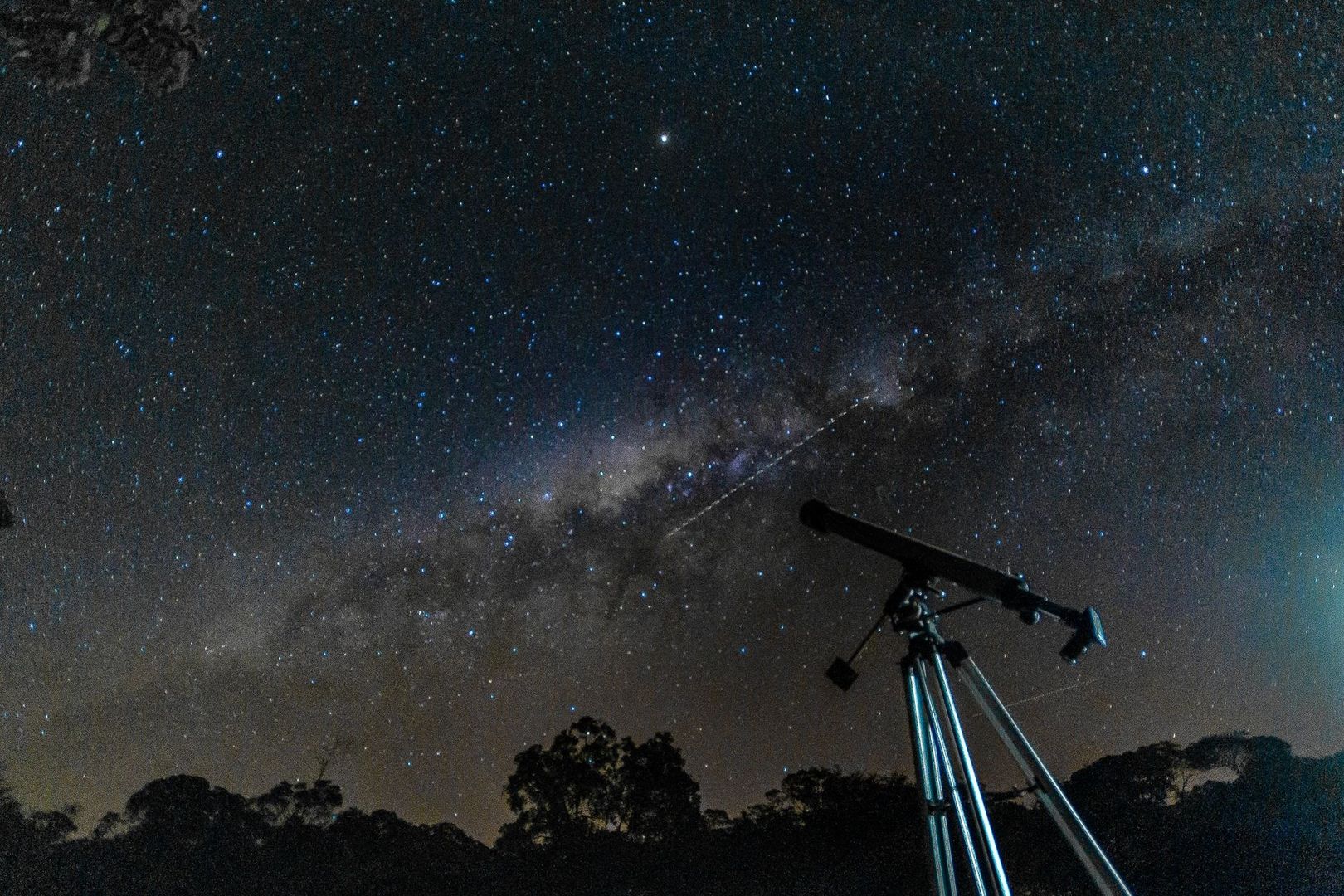
Field observers have a direct role in protecting the conditions they use. Equipment should reduce light spill, preserve night vision, and prevent accidental disturbance at the observing site. A compact kit should include a dimmable narrow-band red LED, spare batteries, a red filter or secondary cover, a headlamp with a mechanical shield, matte-black tape, a small hood or baffle, reflective trail markers used sparingly, and a calibrated meter when quantitative reporting is required.
- Test all lights before departure and disable white-light modes that can activate accidentally.
- Use the lowest effective red output for maps, equipment, and safe footing.
- Cover indicator LEDs on power banks, cameras, computers, and vehicles.
- Orient vehicle doors, screens, and lamps away from habitat and other observers.
- Keep headlights off at the observing pad whenever safe and permitted.
- Use opaque equipment covers to prevent stray illumination from screens and displays.
Humidity creates both an optical and an operational problem. Condensation can degrade optics, cause equipment faults, and scatter nearby light through a thin veil of moisture. Acclimatize cameras and lenses gradually, use dew-control systems where appropriate, and avoid unnecessary illumination when checking equipment. A red light does not become harmless simply because it is red. Excessive intensity can still disturb wildlife and damage the observer”s dark adaptation.
Navigation should be completed before full dark adaptation whenever possible. Mark only essential hazards, avoid repeated walking through sensitive vegetation, and maintain distance from burrows, nests, wetlands, and active feeding areas. Observers should keep voices low, avoid playback calls, and leave no temporary lighting infrastructure behind. The most defensible field presence is quiet, predictable, and reversible. If a site appears to contain concentrated wildlife activity, relocate rather than forcing animals to accommodate the observing operation.
Securing the Future of Peninsular Nightscapes
Protecting Florida”s interior darkness requires containment before degradation becomes visible to casual observers. The practical defense architecture is clear: map regional light domes, identify critical buffer zones, require full shielding for new fixtures, cap unnecessary lumen output, favor warm and narrow-spectrum sources, and maintain quarterly measurements from permanent reference points. Municipal approvals near protected landscapes should include a nighttime impact review, not only a daytime visual assessment.
Regional conservationists can strengthen the system by sharing photometric data across preserve boundaries and establishing common reporting standards. Municipal planners can require downward-directed fixtures, curfews, dimming controls, and enforceable maintenance specifications. Land managers can pair sky measurements with wildlife indicators so that changes in behavior become part of the lighting decision process. These are practical controls, not abstract aspirations.
The long-term objective is a connected network of dark-sky corridors linking inland preserves, rural working lands, wetlands, and prairie habitat. Such corridors will not stop urbanization, but they can prevent every new development node from becoming a permanent source of ecological disruption. Florida”s remaining Class 1 and Class 2 skies will survive only if darkness is treated as a protected operating condition, measured with discipline and defended before the next light dome crosses the horizon.