
Beyond Aerospace Launchpads to the Unforgiving Atlantic Edge
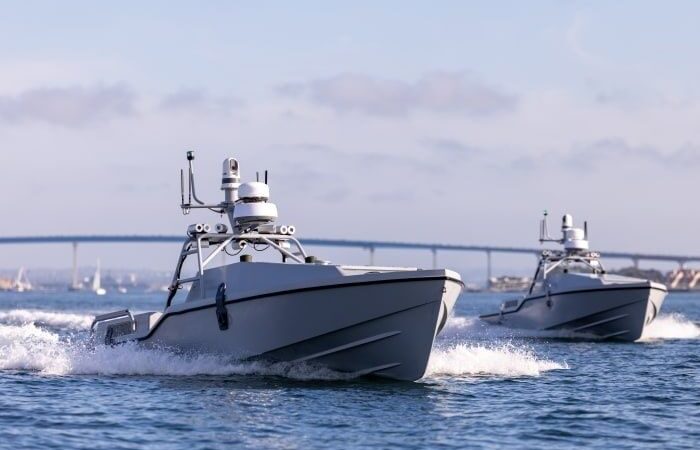
Brevard County”s technology identity was built around launch systems, avionics, remote sensing, precision manufacturing, and mission assurance. The same capabilities now support a wider marine technology corridor, including unmanned surface vehicles, optical ocean sensors, autonomous buoys, and distributed telemetry platforms. The regional context matters. Florida”s long-standing aerospace cluster, commonly associated with the Space Coast technology ecosystem, has created a workforce and supplier base accustomed to operating systems that must remain reliable under severe environmental and operational constraints.
Marine robotics, however, removes the protective assumptions of a controlled launch complex or secured test range. A vehicle deployed miles offshore may have no physical perimeter, limited power, intermittent communications, and no technician available to reset a failed system. An autonomous buoy can attract dual-use scrutiny because its measurements may support environmental research, maritime logistics, fisheries management, or defense analysis, even when its commercial mission is entirely civilian. The security baseline must therefore assume that the ocean is an untrusted network. Field nodes need authenticated commands, encrypted telemetry, resilient recovery paths, tamper awareness, and disciplined handling from provisioning through retrieval.
Mapping the Threat Vector from Salt Spray to Packet Sniffing
The first threat is physical. Saltwater intrusion, condensation, vibration, fouling, corrosion, and storm loading can disable a platform without any hostile actor. Those same conditions also create opportunities for deliberate interference. A mooring may be approached by an unauthorized vessel, a sensor housing may be opened, an antenna may be replaced, or a removable storage device may be copied during recovery. Exposure is not limited to the electronics. Connectors, maintenance ports, exposed serial interfaces, power systems, and recovery fixtures can all become attack surfaces.
Research on mobile robotic receivers shows why this operating model is attractive and difficult. A Frontiers study of a wave-propelled USV integrated real-time acoustic fish telemetry with onboard control, remote piloting, and long-range data management. The platform demonstrated that wave and solar energy can support several-day deployments and extend observations beyond stationary receiver grids. It also showed an important engineering tradeoff: using an auxiliary electric thruster reduced acoustic detection radius by more than half in testing. For security teams, the lesson is broader than propulsion. Every additional subsystem changes power draw, electromagnetic behavior, timing, and the number of components that must be trusted in the field.
Wireless links introduce a separate set of risks. RF telemetry can be intercepted, replayed, jammed, or used to estimate a platform”s location. Acoustic communications face high latency, limited bandwidth, multipath effects, and the possibility that transmissions can be recorded by another receiver. Satellite uplinks reduce dependence on local infrastructure but do not make the endpoint trustworthy. Credentials stored on the vehicle, ground-station software, cloud APIs, and operator accounts remain potential entry points. A sophisticated industrial espionage campaign might target proprietary sensor calibration, mission data, or autonomy behavior, while opportunistic tampering may simply seek to disable a buoy or make its readings unreliable.
- Physical exposure: corrosion, water ingress, unauthorized access, component substitution, and theft of storage media.
- Signal exposure: interception, replay, jamming, traffic analysis, and false positioning information.
- Control exposure: stolen operator credentials, insecure update paths, exposed maintenance ports, and overprivileged commands.
- Data exposure: copied observations, altered timestamps, manipulated sensor values, and loss of chain-of-custody evidence.
Hardening Dual-Use Sensor Arrays Against Field Interception
Zero trust must reach the smallest field node, not stop at the cloud dashboard. A microcontroller should not accept a command merely because it arrived through a recognized modem or an internal bus. Each command needs an authenticated source, an authorized action, an acceptable freshness window, and a defined safety boundary. A navigation update, firmware change, payload poll, and emergency shutdown should not share the same permission level. Where resources permit, hardware-backed keys and secure elements should protect device identity and signing operations. Where resources are constrained, the design should still separate immutable boot logic, operational code, and mission configuration.
Regional investment trends reinforce the value of this layered approach. Central Florida”s emerging technology ecosystem spans advanced semiconductor packaging, optics and photonics, cybersecurity, drones, aerospace manufacturing, and military modernization requirements. Work associated with advanced packaging and silicon interposers is not the same as wafer fabrication, but it reflects a growing regional ability to connect hardware, optical communications, imaging, and secure processing. That capability can help startups move beyond improvised boards and generic enclosures, provided security requirements are specified before procurement rather than added after field failure.

Tamper resistance should be designed around realistic recovery decisions. Epoxied chipsets and sealed housings can deter casual access, but they may also complicate repair and forensic examination. A better pattern is to combine controlled physical barriers with cryptographic response. A device can detect enclosure opening, unexpected voltage changes, clock manipulation, or debug-port activation, then erase or lock sensitive key material while preserving non-sensitive diagnostic evidence. Self-sanitizing cryptographic modules must be tested carefully, because a false trigger during retrieval can destroy the very information needed to explain an incident. Recovery keys, maintenance credentials, and emergency procedures should be governed separately from daily operations.
| Layer | Primary control | Operational tradeoff |
|---|---|---|
| Device identity | Hardware-backed unique keys and signed provisioning records | Higher manufacturing complexity, stronger attribution |
| Boot and updates | Secure boot, signed firmware, rollback protection | Reduces flexibility during urgent repairs |
| Physical enclosure | Seals, tamper sensors, protected ports, corrosion controls | More difficult servicing and inspection |
| Acoustic link | Authenticated, encrypted, replay-resistant packets | More overhead on narrow, intermittent channels |
| Ground station | Least privilege, hardware security keys, isolated recovery workflow | Slower access when teams are under pressure |
Acoustic packet security must account for marine conditions rather than copy an internet protocol unchanged. Packets should carry authenticated sequence information, mission or session identifiers, and expiration data so that a recorded command cannot be replayed later. Encryption protects content, but authentication protects control integrity. Because links may disappear for hours, devices need bounded offline behavior. A vehicle should continue only within a preapproved mission envelope, retain an auditable local log, and reject commands that arrive outside expected timing or authority. Bandwidth-saving measures such as compact headers and carefully chosen message priorities are useful, but they must not remove the fields needed to detect replay, substitution, or partial corruption.
Standardizing Coastal Observability Under Strict Cyber Oversight
Startups often move faster than public observing programs, but speed is not a substitute for interoperability. Shared data models, consistent timestamps, documented sensor calibration, quality flags, and clear metadata allow an environmental observation to be compared with measurements from buoys, satellites, research vessels, and other autonomous platforms. They also make anomalies easier to identify. A sudden shift in readings is more credible when the system can show which firmware version, calibration file, location estimate, and processing pipeline produced it.
The operational value of common frameworks is visible in Oceans in Action at Stennis Space Center, where marine technology organizations, government agencies, researchers, and industry discussed autonomous vehicles, buoy operations, data accessibility, ocean observing standards, and regional coordination. For a commercial fleet, interoperability should include security evidence. Chain of custody needs to cover provisioning, deployment, command history, sensor calibration, data transfer, transformation, and recovery. At the same time, open science does not mean unrestricted exposure of every operational detail. Public data feeds may need to omit precise platform locations, sensitive mission timing, raw diagnostic fields, or information that could reveal capabilities and vulnerabilities.
- Define which observations are public, restricted, delayed, or retained only for internal analysis.
- Attach device identity, time source, calibration status, firmware version, and quality flags to every mission record.
- Use signed data manifests so downstream users can verify that files were not altered.
- Separate environmental measurements from command channels, credentials, and system diagnostics.
- Document disclosure procedures for suspected compromise, corrupted readings, or lost platforms.
Operational Checklist for Deploying Secure Autonomous Fleets
Security failures often begin before launch. A fleet that has never completed a controlled provisioning and recovery exercise is not ready for an exposed deployment. Pre-mission work should establish exactly what the vehicle is allowed to do, which systems can command it, and how operators will distinguish a communications outage from an active attack. This discipline becomes more important as startups scale from one demonstrator to multiple vehicles with shared software and partially shared credentials.
- Provision immutable identity: install device-specific keys, signed boot components, certificate or trust-anchor records, and a documented ownership chain before the platform reaches the water.
- Lock the mission envelope: define permitted geography, speed, depth, payload activity, communication windows, and safe behavior during lost contact.
- Verify the build: compare firmware hashes, configuration files, sensor calibration records, and component serial numbers against the approved release.
- Test degraded communications: simulate RF loss, acoustic delay, satellite interruption, rejected commands, and repeated or out-of-order packets.
- Monitor for anomalies: alert on unusual polling frequency, unexpected payload activation, impossible location changes, clock drift, repeated authentication failures, and telemetry blackouts that do not match weather or coverage conditions.
- Protect the ground station: use separate operator and recovery accounts, hardware-backed multifactor authentication, segmented networks, and offline copies of trusted software.
- Recover as a hostile-device event: isolate retrieved equipment, preserve volatile evidence where practical, scan removable media, and do not connect an unknown vehicle directly to the production network.
In-situ detection should favor signal over noise. A blackout alone does not prove compromise, because power budgets, antenna orientation, sea state, and propagation conditions can all interrupt telemetry. Confidence rises when several indicators coincide, such as a blackout followed by an unexpected position report, a sudden change in message size, or payload polling outside the mission schedule. Detection logic should therefore combine communications health, navigation consistency, power behavior, physical tamper state, and command authorization results.
Post-recovery hygiene is equally important. Retrieval gear can carry contaminated storage, altered firmware, or diagnostic tools that were exposed in uncontrolled environments. Create a quarantine workstation for initial inspection, prohibit automatic mounting of removable media, record every person and tool involved in handling, and compare recovered software with a known-good baseline. Credentials used during recovery should be temporary and revoked after the operation. Any device that cannot establish a trustworthy software and hardware state should remain isolated until forensic review is complete.
Building Resilient Autonomous Frontiers for Florida’s Marine Corridor
Brevard”s marine technology opportunity depends on converting aerospace habits into ocean-specific security practice. The immediate priorities are clear: authenticate every command, encrypt sensitive telemetry, minimize privileges, protect keys in hardware where feasible, detect tampering, preserve trustworthy logs, and treat retrieved equipment as untrusted until inspected. These controls should be part of the system architecture, not a compliance package assembled after a customer asks difficult questions.
For founders and technology leaders, hardened edge devices are more than a defensive expense. They support reliable evidence, safer operations, faster incident response, and stronger confidence among commercial, scientific, and defense-adjacent customers. Before the next offshore deployment, define the mission envelope, verify the cryptographic chain, test degraded links, rehearse recovery, and decide in advance what data can be shared. The companies that make those habits routine will be better positioned to scale across Florida”s marine corridor without allowing exposure at the edge to become a weakness at the center.